Saturday, August 24, 2013

Two yard sale books, $1.00

1_7149f45996bd4492dbf522c8b236bf59[1]

I didn’t see anything at the dealers, but there was a yard sale about 2 blocks away and I found two books for $.50 each, The folklore of Maine, by Horace P. Beck, 1st ed., 1957, nice cover, perfect condition, but dull to read, and the 1998 hardcover of Taste of Home Annual Recipes. These recipes are very similar to what I already make, but they are useful for jogging the memory.  I think today I’ll make “Calico eggs,” which has peppers, onions and tomatoes.

Sausage Granola Squares Recipe

Also saw a very easy looking sausage dish, “Sausage granola squares.”  1/2 lb of bulk sausage, 3/4 cup of granola cereal with fruit and nuts, and 1 egg slightly beaten. Combine, put in 2 qt. baking dish, at 375 for 20 min.  It doesn’t say to lightly cook the sausage and drain first, but I would. 1 serving (1/2 cup) equals 205 calories, 15 g fat (5 g saturated fat), 74 mg cholesterol, 270 mg sodium, 11 g carbohydrate, 1 g fiber, 7 g protein.


Thursday, August 15, 2013

C.S. Lewis books

The speaker at Lakeside this week is Dr. Jerry Root, a C.S. Lewis scholar at Wheaton College. He is marvelous, speaking to packed hall, but quite a challenge. If it weren't for his stories and anecdotes, his talks on "pain," or "evil," would be a little too dense to follow on such a lovely day when one could walk down to the hotel lawn and watch sailboats.

So I went down to our new bookstore, "Fine Print" and bought two of his books. "The soul of C.S. Lewis; a mediative journey through twenty-six of his best-loved writings," written and edited by Wayne Martindale, Jerry Root, and Linda Washington, Tyndale House Publishers, 2010, and "The quotable Lewis, an encyclopedic selection of quotes from the complete published works of C.S. Lewis," Wayne Martindale and Jerry Root, editors. Tyndale House, 1990. Both books should suit my attention span. By reading these books, I think you have a plan for a university education.

From the Tyndale page: "Jerry Root, PhD, wrote both his MDiv thesis and PhD dissertation on C. S. Lewis. He is an associate professor at Wheaton College and a visiting professor at Biola University, teaching courses on Lewis at both schools. He has written several books and numerous articles on Lewis as well as lectured about him on fifty-four college and university campuses in seven different countries. He has been teaching college and university courses on Lewis since 1980."

Book details

Oh, and now I have a shopping bag that says Peace. Love. Books.

Saturday, March 23, 2013

Bible Stories

We have a remainder/cut price store in Columbus called "Marc's." I found a little treasure yesterday for $3. If you go to the last aisle past the cereal and carpets, they've moved a section of children's books. On the top shelf there were about 20 copies of "Bible Stories," by Martina Degl'innocenti and Stella Marinone. I picked one up thinking it was a child's book, but it wasn't--it was about every manner of art from paintings, to sculpture to tapestry to miniatures, illustrating biblical stories--275 in full color. It was originally published in Italy, and the reprint (Abrams) was done in Spain. The authors have selected every major and minor Bible story and illustrated it with art from the ages. The text is elegant and easy to read with no weird ideas on what the stories meant. Very straight forward. One little treasure was something we'd seen when we were in Orvieto, Italy, a few years ago. http://www.barnesandnoble.com/w/bible-stories-martina-deglinnocenti/1100715221

Saturday, January 5, 2013

Booknotes from 1983 and 1984

With the New Year, I've been repacking old notebooks and files, and came across a list of books I read in 1983--whether I actually owned them I don't remember--or least not most.

1983 (Summer)

Fiction

Thornbirds

Tim

Indecent obsession

Second Generation

Texas

Non-fiction

Your Christian wedding (I was the church librarian and not only purchased the books but reviewed them for the newsletter)

When your kids have children

The masks of melancholy

Death of a Guru

Touchstones; letters between two women, 1953-1964 (I remember this was a gift from a friend)

1984

An adopted woman by Katrina Maxtone-Graham. I drove to Cincinnati with a friend to hear her give a presentation at a department store. She was the mother-in-law of my assistant who was married to her daughter. He later had a sex change and became a woman. Interesting family. I think I did own this book.

Temptation (I assume this was something for the church library)

Our marvelous native tongue

Giving time a chance

Monday, December 31, 2012

End of the year bookshelf cleaning--9 books out the door

These titles will go to the library book sale.  Most were purchased used or were from the free box at church, and they don't need to hang around.

1)  Reader's Digest Complete Guide to Needlework (clearance sticker says $3, 9/27/05)

craft books

2) Millie's book as dictated to Barbara Bush

Millie's Book as Dictated to Barbara Bush 1990 HB 1st Edition

3)  More difficult sayings of Jesus

4)  How should we then live? The rise and decline of Western thought and culture by Francis A. Schaeffer


5)  A short exposition of Dr. Martin Luther's Small Catechism.  Concordia Publishing House, 1906.

6)  The purpose driven life by Rick Warren

7)  The Billy Graham Christian worker's handbook; a layman's guide for soul winning and personal counseling

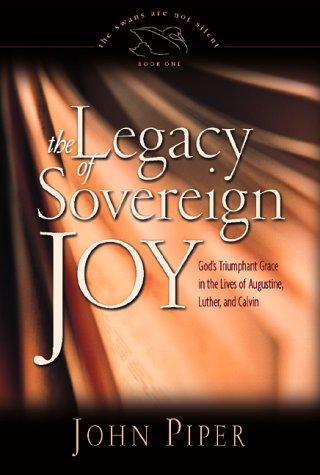
8)  The legacy of sovereign joy by John Piper (2000)

Cover of: The Legacy of Sovereign Joy by John Piper

9)  The right man; the surprise presidency of George W. Bush by David Frum

Kim by Rudyard Kipling (1901)

The January selection for our book club is Kim by Rudyard Kipling (c1901), and I purchased a paperback copy (Penguin edition, 1987) at Half Price Books. Usually I don't write or underline in books, but I probably won't keep this one, and with confusing names and events, thought underlining might be helpful.


http://cowpattyhammer.wordpress.com/2011/05/30/kim-kipling-kamakura/

I'm finding it very interesting, and Kipling's knowledge of the country of his birth which he left at a young age is amazing. Also enlightening are the notes and introduction in my used paperback copy (Penguin, 1987) by Edward Said, probably read by thousands of high school and college students in the last 25 years. Dinesh D'Sousa calls Edward Said Obama's founding father.... "One of Obama’s founding fathers who remains relatively unknown is the Palestinian radical Edward Said. Prior to his death in 2003, Said was the leading anti-colonial thinker in the United States. Obama studied with Said at Columbia University and the two maintained a relationship over the next two decades Said is actually an excellent writer, and I’m thankful to have his critical analysis of a novel 110 years old. But as a man without a country, a U.S. immigrant always unhappy with his adopted home, he reminds me so much of all the transient (in soul and sometimes body) faculty and foreign students I knew at the University of Illinois in the 1950s-60s. Because I was a foreign language major many of my instructors were emigres—driven from homeland by politics or war. First degree relatives shot, burned or imprisoned, never to be seen again. The cultural heritage of centuries ripped away. Many of my classmates came to the U.S. as “displaced persons” as toddlers or children after WWII--grateful for their lives, but always mourning what had been lost to Stalin, or Mao, or Hitler, or Tito, etc. Some had been ethnic Chinese whose families had lived for years outside China, sort of double displacement.

No matter what is good in the novel Kim, Said can't get past British imperialism, as Obama can't get past what he calls American imperialism. One can substitute Said's situation for what he says about colonial powers/Kim's: "For what one cannot do in one's own [homeland--anywhere in the middle east or Asia] where to try to live out the grand dream of a successful quest is only to keep coming up against one's own mediocrity and the world's corruption and degradation, one can do abroad." (p. 42 introduction, Penguin ed.) I think Said enjoyed his tiny celebrity status as the ultimate anti-colonialist, and he would have been a nobody in any other country without the give and take and freedom of speech he was allowed in the U.S. and classrooms filled with adoring disciples ready to deny anything good in Western civilization.

Wednesday, July 25, 2012

None dare call it treason

Title: None dare call it treason (pb 1964) John A. Stormer wrote this book in 1964. I picked it up at a sale in Lakeside--vaguely remembered the title. Here are some of the chapter titles--if the paper weren't brittle I'd think it was a 2012 paperback.
  • The growth of world Communism
  • How has it happened?
  • Education
  • Subverting our religious heritage
  • The press, radio and TV
  • The Organized labor movement
  • The tax-exempt foundations
  • Internationalism
Glancing through this nearly 50 year old book, I see some things haven’t changed much. Particularly, education, the media and tax-exempt foundations. Revising textbooks to eliminate nationalism, taking history out of the early grades, belittling patriotism, and eliminating the Pledge of Allegiance were noted (quotes suggestions from UNESCO). http://www.scribd.com/doc/52165577/None-Dare-Call-It-Treason-John-Stormer-1964